Step 1 Download and Install ISO Burner Mac Edition. Download ISO Burner for Mac and install it on your computer. Launch the program and click on the 'Burn' module on the home screen. Step 2 Add USB Drive to Mac. Insert the USB drive into an available, active port and it will automatically be detected and displayed on the software interface.
- ImgBurn Mac: How to Burn DVD or Image on Mac. Free Download Free Download How to DVD ImgBurn Mac: How to Burn DVD or Image on Mac. Aug 03,2018. Filed to: DVD. Proven solutions. Imgburn is a lightweight CD, DVD or Blu-ray burner for Windows. The DVD burner is continuously gaining the popularity for it provides the.
- ImageBurner is a front-end for the MacOS X 'hdiutil' command-line tool. It allows you to easily burn disk images (such as ISOs) to CD-ROM or DVD-ROM using drag-and-drop, without messing with the.
- Raspberry Pi have developed a graphical SD card writing tool that works on Mac OS, Ubuntu 18.04 and Windows, and is the easiest option for most users as it will download the image and install it automatically to the SD card.
- You can create an empty disk image, add data to it, then use it to create disks, CDs, or DVDs. In the Disk Utility app on your Mac, choose File New Image Blank Image. Enter a filename for the disk image, add tags if necessary, then choose where to save it.
If you have been dealing with softwares and operating systems for a period, then you must have come across an indispensible terminology as 'ISO image' or 'ISO file'. Do you ever wonder what do they mean exactly while working with them? Most of the users do not pay much attention to the detail of the file, but rather proceed with the procedures that lay ahead. Well that is not going to support you if you head on with intricate software and operating system issues for the long run. So it is better to know what ISO images really are.
ISO images are basically images containing information of a particular software or operating system you are so seeking in a compressed format. This menial format allows software vendors and IT companies to securely and conveniently share their products across the market without much difficulty. And ISO can be burned into DVD and USB for installing a operating system.
So if you ever run into a situation where your system has been compromised and you need to re-install or format it immediately, then you definitely need an ISO burner to burn ISO images to an optical disk (USB or DVD/CD). Mere copy paste of the file into the disk would not do the job. And this is what we are going to discuss in this article in detail.
Method 1: Burn ISO Image to DVD/CD with ImgBurn
ImgBurn is generally used for producing ISO image files as well as burning ISO files to discs. Apart from ISO images, it can also burn quite a huge number of file formats to discs like ISO, IMG, MDS, BIN & NRG files. Not only that, you can even use this tool to make ISO, IMG and BIN files from the existing files and folders in your computer. But it is only supported in almost all Windows platform, from Windows 95 to the latest Windows 8. Moreover, there are many exception features that are not available on free tools but be careful because ImgBurn will automatically install adware during the installation, so make sure to uncheck them and customize the installation process according to your requirement.
Step 1. Download and run the installer for Pismo File Mount Audit Package.
Step 2. After finishing the installation process, just right click on the ISO file and select 'Mount Image'.
Step 3. Within few seconds the mounting should be done and the icon of the ISO image will change that looks like as follows - You may now double click on the folder and it will open normally like the snapshot below.
Step 4. Now, select all the files and folders from the mounted image and copy it to a distinct folder. After copying is finished, go ahead and 'unmount' the ISO image file so that it can return to the ISO format.
Cons –
- It is an outdated version and might not support UEFI-basd Windows 10, 64 bit.
- Automatically install adware during the installation.
- Suitable for professionals.
- Doesn't support for RAW formats. This goes for ripping and also for burning.
Method 2: Burn ISO Image to Bootable DVD/CD with ISOGeeker
Due to the lackness of effective techniques and updates, ImgBurn didn't support the latest UEFI-based computer and windows 10 64 bit. On the contrary, TunesBro ISOGeeker has been released since the begining of the Windows 7 and totally different to the other tools. It can be able to burn a ISO image into a writable DVD, CD disk with also writing the ISO booting parameters, after the burning, your DVD/CD can be bootable on another computer. The whole burning procedure is done automatically and continuously without getting any errors like other tools, you don't need to make any settings. There are some other useful features included such as burning ISO, creating ISO, extracting ISO, editing ISO and copy image from Disc.
Needless to say, that this ISOGeeker is fully equipped with all the necessary features that has been missing in many of your attempted tools, and can really assure you of a full fledge output.
ISOGeeker - Directly Extrtact ISO Image Files without Burning
- All-in-one ISO tool including Burning, Extracting, Creating, Editing and making ISO from Disc.
- Two ways to burn: USB, DVD/CD
- It works for both MBR (legacy BIOS/CMS boot) modes and GPT (UEFI boot).
- Open and extract everything from a ISO file with one-click.
- C ompatible with all Windows OS, namely, XP/ Vista/ 7/ 8/ 10.
Step 1. Download ISOGeeker on to your computer (Windows and Mac vesrion are all available), then Install it accurately with installation wizard. Now open up the tool and from the main screen click on 'Burn' option.
Step 2. This part, you will first be required to select the ISO file that you want to burn into DVD/CD. Just click the browsing button to import your ISO image. If you're using a portable DVD/CD drive, then you need to connect your DVD or DVD drive into your computer. The program will recognize your DVD and list it in the box. Then click the Burn button to start writing ISO image to your DVD/CD.
Step 3. It will take few minutes to finish the burning process, kind your DVD/CD drive is connected during the burning. You'll see a progress screen while the data is written to the DVD/CD and finalizing
After burning, it will pops up a Windows saying 'Burn successfully!' and DVD/CD will be ejected. Then you can check the all the ISO files were burned into the disc, means it can be used to install operating system.
And it's all done. The whole process is very straight-forward, and for a full walkthrough on this.
Conclusion:
Most ISO burning software may has a bit of legal trouble because they will remove macro copyright. But don't worry, TunesBro ISOGeeker never remove the copyright protection from any DVD/CD, it just write the ISO image to disc with legitimate control arithmetic, and never remove copyright protection. If you have a ISO installation file, it's highly recommend to using ISOGeeker to create a bootable DVD/CD fro ISO image right now, If your computer is in danger and requires urgent formatting due to malware invasion, then the newly created bootable disc will be helpful to you.
Related Articles & Tips
Disk Utility User Guide
You can use Disk Utility to create a disk image, which is a file that contains other files and folders.
Note: You can burn information to a CD or DVD using the Burn command in the Finder. See Burn CDs and DVDs.
Create a blank disk image for storage
You can create an empty disk image, add data to it, then use it to create disks, CDs, or DVDs. Is skyrim legendary edition for mac.
In the Disk Utility app on your Mac, choose File > New Image > Blank Image.
Enter a filename for the disk image, add tags if necessary, then choose where to save it.
This is the name that appears in the Finder, where you save the disk image file before opening it.
In the Name field, enter the name for the disk image.
This is the name that appears on your desktop and in the Finder sidebar, after you open the disk image.
In the Size field, enter a size for the disk image.
Click the Format pop-up menu, then choose the format for the disk:
If the disk image will be used with a Mac that has a solid state drive (SSD) and uses macOS 10.13 or later, choose APFS or APFS (Case-sensitive).
If the disk image will be used with a Mac with macOS 10.12 or earlier, choose Mac OS Extended (Journaled) or Mac OS Extended (Case-sensitive, Journaled).
If the disk image will be used with a Mac or Windows computer and is 32 GB or less, choose MS-DOS (FAT); if it’s over 32 GB, choose ExFAT.
To encrypt the disk image, click the Encryption pop-up menu, then choose an encryption option.
Click the Partitions pop-up menu, then choose a partition layout.
Click the Image Format pop-up menu, then choose an option:
Sparse bundle disk image: Same as a sparse disk image (below), but the directory data for the image is stored differently. Uses the .sparsebundle file extension.
Sparse disk image: Creates an expandable file that shrinks and grows as needed. No additional space is used. Uses the .sparseimage file extension.
Read/write disk image: Allows you to add files to the disk image after it’s created. Uses the .dmg file extension.
DVD/CD master: Changes the size of the image to 177 MB (CD 8 cm). Uses the .cdr file extension.
Click Save, then click Done.
Disk Utility creates the disk image file where you saved it in the Finder and mounts its disk icon on your desktop and in the Finder sidebar.
In the Finder, copy your files to the mounted disk image, then eject it.
Restore the disk image to a disk.
For more information about disk image types, see the manual (man) page for hdiutil.
Create a disk image from a disk or connected device
You can create a disk image that includes the data and free space on a physical disk or connected device, such as a USB device. For example, if a USB device or volume is 80 GB with 10 GB of data, the disk image will be 80 GB in size and include data and free space. You can then restore that disk image to another volume.
In the Disk Utility app on your Mac, select a disk, volume, or connected device in the sidebar.
Choose File > New Image, then choose “Image from [device name].”
Enter a filename for the disk image, add tags if necessary, then choose where to save it.
This is the name that appears in the Finder, where you save the disk image file before opening it.
Click the Format pop-up menu, then choose an option:
Read-only: The disk image can’t be written to, and is quicker to create and open.
Compressed: Compresses data, so the disk image is smaller than the original data. The disk image is read-only.
Read/write: Allows you to add files to the disk image after it’s created.
DVD/CD master: Can be used with third-party apps. It includes a copy of all sectors of the disk image, whether they’re used or not. When you use a master disk image to create other DVDs or CDs, all data is copied exactly.
To encrypt the disk image, click the Encryption pop-up menu, then choose an encryption option.
Click Save, then click Done.
Disk Utility creates the disk image file where you saved it in the Finder and mounts its disk icon on your desktop and in the Finder sidebar.
Important: Don’t create a disk image of a disk that you believe to be failing or that contains corrupted information. The disk image may not serve as a reliable backup.
For technical information about creating a restore disk image, see the Apple Software Restore (ASR) manual (man) page.
Create a disk image from a folder or connected device
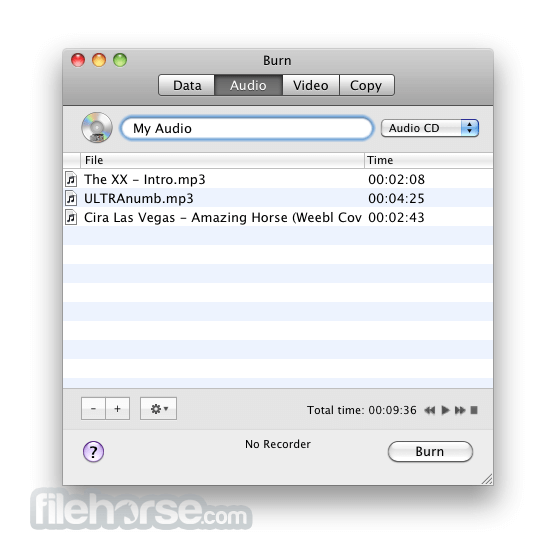
Image Burn For Mac Osx
You can create a disk image that contains the contents of a folder or connected device, such as a USB device. This method doesn’t copy a device’s free space to the disk image. For example, if a USB device or volume is 80 GB with 10 GB of data, the disk image will be 10 GB in size and include only data, not free space. You can then restore that disk image to another volume.
In the Disk Utility app on your Mac, choose File > New Image, then choose Image from Folder.
Select the folder or connected device in the dialog that appears, then click Open.
Enter a filename for the disk image, add tags if necessary, then choose where to save it.
This is the name that appears in the Finder, where you save the disk image file before opening it.
To encrypt the disk image, click the Encryption pop-up menu, then choose an encryption option.
Click the Image Format pop-up menu, then choose an option:
Read-only: The disk image can’t be written to, and is quicker to create and open.
Compressed: Compresses data, so the disk image is smaller than the original data. The disk image is read-only.
Read/write: Allows you to add files to the disk image after it’s created.
DVD/CD master: Can be used with third-party apps. It includes a copy of all sectors of the disk image, whether they’re used or not. When you use a master disk image to create other DVDs or CDs, all data is copied exactly.
Hybrid image (HFS+/ISO/UDF): This disk image is a combination of disk image formats and can be used with different file system standards, such as HFS, ISO, and UDF.
Click Save, then click Done.
Disk Utility creates the disk image file where you saved it in the Finder and mounts its disk icon on your desktop and in the Finder sidebar.
Image Burn For Mac
For technical information about creating a restore disk image, see the Apple Software Restore (ASR) manual (man) page.
Create a secure disk image
If you have confidential documents that you don’t want others to see without your permission, you can put them in an encrypted disk image.
Note: If you want to protect the contents of the system disk, turn on FileVault using the FileVault pane of Security & Privacy Preferences.
In the Disk Utility app on your Mac, choose File > New Image > Blank Image.
Enter a filename for the disk image, add tags if necessary, then choose where to save it.
This is the name that appears in the Finder, where you save the disk image file before opening it.
In the Name field, enter the name for the disk image.
This is the name that appears on your desktop and in the Finder sidebar, after you open the disk image.
In the Size field, enter a size for the disk image.
Click the Format pop-up menu, then choose a format:
If you’re using the encrypted disk image with a Mac computer using macOS 10.13 or later, choose APFS or APFS (Case-sensitive).
If you’re using the encrypted disk image with a Mac computer using macOS 10.12 or earlier, choose Mac OS Extended (Journaled) or Mac OS Extended (Case-sensitive, Journaled).
Click the Encryption pop-up menu, then choose an encryption option.
Enter and re-enter a password to unlock the disk image, then click Choose.
WARNING: If you forget this password, you won’t be able to open the disk image and view any of the files.
Use the default settings for the rest of the options:
Click the Partitions pop-up menu, then choose Single partition - GUID Partition Map.
Click the Image Format pop-up menu, then choose “read/write” disk image.
Click Save, then click Done.
Disk Utility creates the disk image file where you saved it in the Finder and mounts its disk icon on your desktop and in the Finder sidebar.
In the Finder , copy the documents you want to protect to the disk image.
If you want to erase the original documents so they can’t be recovered, drag them to the Trash, then choose Finder > Empty Trash.
When you’re finished using the documents on the secure disk image, be sure to eject the disk image. As long as it’s available on your desktop, anyone with access to your computer can use the documents on it.
Image Burning Software Mac
To access the data in a disk image, double-click it. It appears on your desktop, and you can add, remove, and edit files on it just as you would with a disk.
Comments are closed.