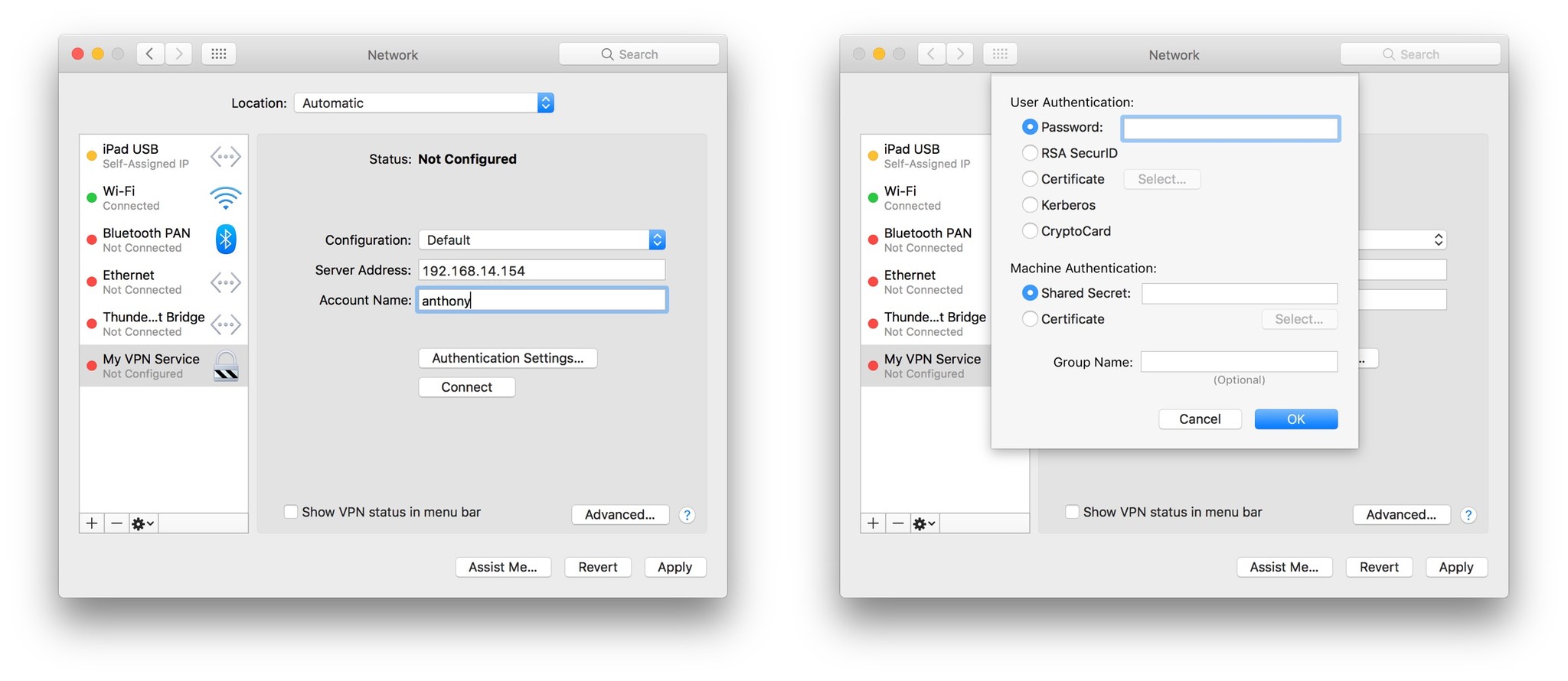
The OpenVPN protocol for mac OS requires a client program to capture the traffic you wish to send through the OpenVPN tunnel. This program is purposefully limited in its functionality in the sense that it only supports one active VPN tunnel at a time. Trying to connect to two different servers at the same time is a function we did not build. Set up a VPN connection on Mac. To connect to a virtual private network (VPN), you need to enter configuration settings in Network preferences. These settings include the VPN server address, account name, and any authentication settings, such as a password. Start the VPN client for Mac, select the server location you want to connect to and surf the internet through an encrypted tunnel. All data is sent and received anonymously and secured with military-grade security. The outside world only sees your virtual IP address through the VPN server location selected. You are an online phantom.
Viber for mac viber desktop. Viber for Desktop is synced to your mobile account. To activate Viber for Desktop, you will need an active Viber account on your mobile phone. Download for Windows Download for Mac.
Cisco AnyConnect is the recommended VPN client for Mac. The built-in VPN client for Mac is another option but is more likely to suffer from disconnects.
Overview
Stanford's VPN allows you to connect to Stanford's network as if you were on campus, making access to restricted services possible. To connect to the VPN from your Mac you need to install the Cisco AnyConnect VPN client.
Two types of VPN are available:
- Default Stanford (split-tunnel). When using Stanford's VPN from home, we generally recommend using the Default Stanford split-tunnel VPN. This routes and encrypts all traffic going to Stanford sites and systems through the Stanford network as if you were on campus. All non-Stanford traffic proceeds to its destination directly.
- Full Traffic (non-split-tunnel). This encrypts all internet traffic from your computer but may inadvertently block you from using resources on your local network, such as a networked printer at home. If you are traveling or using wi-fi in an untrusted location like a coffee shop or hotel, you may wish to encrypt all of your internet traffic through the Full Traffic non-split-tunnel VPN to provide an additional layer of security.
Need for speed rivals mac. You can select the type of VPN you want to use each time you connect.
To help the cheese sauce stick to the pasta, the macaroni is cooked until just beyond al dente, which makes it more absorbent and starchier. To get that, you'll need to ignore conventional wisdom about cooking pasta until just tender (al dente). Best cheeses for mac and cheese. This recipe calls for a 3-quart casserole dish, but multiple smaller baking dishes could be used. A great macaroni and cheese requires perfect melding of the pasta and the cheese sauce.
Install the VPN client
- Download the Cisco AnyConnect installer for Mac.
- Double-click the InstallAnyConnect.pkg file to start the Cisco AnyConnect Installer wizard.
- When the Welcome window displays, click Continue.
- Select your hard drive as the destination where you want to install Cisco AnyConnect and then click Continue.
- Click Install to perform a standard installation of the software.
- At the prompt, enter your administrator account password for the Mac and click Install Software.
- When the software has finished installing, click Close.
Vpn Connection For Mac
Connect to the Stanford VPN
Vpn For Macbook
- To launch the VPN client, open your Applications folder and navigate to Cisco > Cisco AnyConnect Secure Mobility Client.app.
- When prompted for a VPN, enter su-vpn.stanford.edu and then click Connect.
- Enter the following information and then click OK:
- Group: select Default Stanford split- tunnel (non-Stanford traffic flows normally on an unencrypted internet connection) or Full Traffic non-split-tunnel (all internet traffic flows through the VPN connection)
- Username: your SUNet ID
- Password: your SUNet ID password
- Next, the prompt for two-step authentication displays.
- Enter a passcode or enter the number that corresponds to another option(in this example, enter 1 to authenticate using Duo Push on an iPad). You may have to scroll down the list to see all of your options. Then click Continue.
- If your only registered authentication method is printed list, hardware token, or Google Authenticator, the menu does not display. Enter a passcode in the Answer field and click Continue.
- Click Accept to connect to the Stanford Public VPN service.
- Once the VPN connection is established, the Cisco AnyConnect icon with a small lock appears in the dock.
Disconnect from the Stanford VPN
Vpn Client For Mac
- Click the Cisco AnyConnect icon with a small lock.
- At the prompt, click Disconnect.
Comments are closed.